
Holiday-Proof Your Business: Avoid the December Drop-Off with AI
Holiday-Proof Your Business: Avoid the December Drop-Off with AI

The December Drop-Off is the seasonal slowdown when home-service lead volume and booked jobs often decline, and businesses lose revenue to missed calls and gaps in coverage. This article explains how AI automation maintains business consistency through the holidays by capturing every lead, optimizing scheduling, and automating follow-ups so bookings stay steady from fall into the new year. You will learn root causes of the December dip, practical AI-driven workflows that prevent lost revenue, and marketing strategies to keep bookings high during holiday windows. We define mechanisms—24/7 Voice AI, automated follow-up sequences, and data-driven campaign timing—and show specific operational and marketing tactics that generate measurable retention improvements. The following sections analyze causes of the slowdown, then outline step-by-step AI interventions, industry-specific solutions for HVAC, plumbing, and cleaning, and finally product-aligned options that let operators test and adopt automation with minimal disruption. By the end you’ll have tactical lists, comparison tables, and workflow templates to holiday-proof operations and sustain customer retention.
What Causes the December Drop-Off in Home Service Businesses?
The December Drop-Off is caused by a mix of customer behavior shifts, operational constraints, and marketing timing failures that together reduce booked work and weaken retention. During holidays customers postpone non-urgent projects, staff availability shrinks, and misaligned promotions fail to reach high-intent segments, producing lower inbound leads and longer decision windows. Understanding these mechanisms clarifies where automation and continuous engagement must be applied to preserve revenue and prevent churn. Below we break down the most common causal elements and link each one to a practical mitigation tactic to prepare for the next section on AI-driven solutions.
Holiday slowdowns generally stem from a few predictable patterns:
Customer behavior changes toward postponement and gift-season priorities reduce immediate demand.
Operational blindspots like missed calls, shorter hours, and staff shortages prevent lead capture.
Marketing and campaign timing that don’t target off-season intent fail to convert softer leads.
These causes point directly to the need for continuous lead capture, automated nurturing, and smarter scheduling so business continuity persists through holiday disruptions.
How Do Holiday Season Slowdowns Impact Lead Generation and Sales?
Holiday season slowdowns typically reduce inbound inquiry volume and extend sales cycles, meaning fewer immediate bookings and more leads that require nurturing. Lower inquiry volume compounds when response times slip, because delayed responses convert at a much lower rate and potential customers postpone decisions. For home services, projects are often seasonal, so delays translate into lost revenue windows that are hard to recover; consistent outreach is required to convert leads who plan work after the holidays. This pattern means businesses should replace one-off marketing pushes with automated, multi-touch engagement that keeps slower leads warm and shortens the decision lag. The next issue to consider is how operational failures—especially missed calls and reduced staffing—turn these softer leads into permanently lost opportunities.
Why Are Missed Calls and Staffing Shortages Critical During Holidays?
Missed calls and staffing shortages during holidays directly translate to un-captured leads and immediate revenue losses because many customers call when they’re ready to book or when an emergency demands quick service. When staff levels fall and hours shrink, the effective answer rate drops and potential jobs are lost or given to competitors; the economics are simple: each missed qualified call can represent a booked job and recurring revenue stream. Mitigation tactics include failover answering, prioritized callbacks, and automated qualification so that even with fewer human agents you still capture and route the highest-value requests. Addressing these operational gaps leads naturally to automation options—especially Voice AI and follow-up sequences—that preserve lead capture 24/7 and protect holiday revenue.
What Are the Unique Challenges for HVAC, Plumbing, and Cleaning Services?
HVAC, plumbing, and cleaning services face industry-specific holiday dynamics that amplify the December Drop-Off and require tailored mitigation. HVAC faces concentrated winter demand and emergency heating failures; plumbing sees higher emergency calls around gatherings and cold-weather pipe issues; cleaning services experience surges for holiday events and cancellations for recurring slots. Each trade needs triage rules, prioritized dispatching, and automation that fits service patterns—for example, pre-season maintenance outreach for HVAC, keyword-based emergency routing for plumbing, and recurring booking automation for cleaning. These trade-specific pain points set up how AI-driven scheduling and call handling should be conpd to maintain bookings and reduce cancellations during the holiday period.
How Can AI Automation Prevent the December Sales Dip?
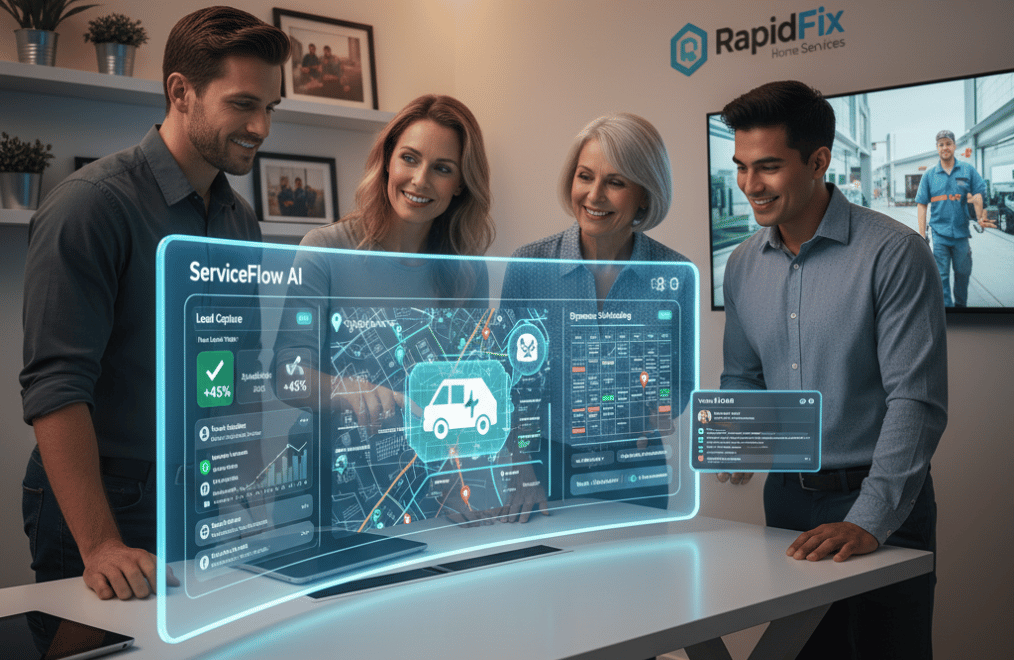
AI automation prevents the December sales dip by providing continuous lead capture, immediate qualification, and scheduled nurturing that together convert softer holiday leads into booked work. At the mechanism level, Voice AI answers calls 24/7, automations send tiered follow-ups, and scheduling logic optimizes dispatch to available resources, which reduces drop-off and keeps pipeline velocity steady. These automated interventions cut response time, increase conversion rates, and enable targeted promotions timed to customer behavior. Below are operational steps and a comparison table showing how each lead channel benefits from AI-enhanced workflows to improve capture, response time, and conversion.
Use this EAV table to compare lead capture channels and how AI automations change their outcomes.
Different lead sources require distinct capture and response rules; this table shows how AI automations raise conversion potential across channels.
This comparison clarifies that automation shifts the bottleneck from human availability to system-driven capture and qualification, preserving conversions during holiday staffing gaps.
When implementing these patterns, a practical how-to list helps structure deployment:
Capture every incoming contact using 24/7 Voice AI or immediate web acknowledgments so no lead goes unanswered.
Qualify leads automatically to filter emergencies and high-intent bookings for priority routing.
Schedule available technicians via smart rules that consider location, skill, and SLA to maximize daily capacity.
Nurture lower-intent leads with automated multi-channel follow-ups timed for post-holiday conversion.
These steps illustrate the flow from capture to booking and set the stage for product-specific implementation examples that follow.
In practice, AI-assisted automation can be deployed with product tools that include voice answering, automated follow-ups, and scheduling; for example, an AI-powered CRM that answers calls, books jobs, and follows up 24/7.
Voice AI for 24/7 call answering → Ensures no lead is missed during holidays.
Automations for follow-ups → Keeps slower leads engaged until they are ready to book.
AI-driven scheduling → Clusters jobs by geography to maximize technician efficiency.
These examples show how product-level features translate into operational resilience during holiday months.
What Role Does 24/7 Voice AI Play in Capturing Every Lead?
24/7 Voice AI answers calls any time, performing initial qualification and routing so high-priority issues get immediate attention and routine requests get scheduled without delay. The mechanism is simple: the AI detects intent through keywords, asks qualifying questions, and either books a job or routes to an on-call tech, which reduces the rate of missed leads and speeds time-to-book. The specific benefit is that after-hours and holiday calls become actionable opportunities instead of lost revenue, which preserves pipeline volume during staffing gaps. Because Voice AI takes the first pass at qualification and booking, businesses can reallocate human agents to higher-value tasks while the system handles routine capture and scheduling.
How Do Automated Follow-Ups Nurture Leads During Peak Seasons?
Automated follow-ups nurture leads by maintaining timely, personalized contact across SMS, email, and voice so holiday-era prospects remain engaged despite longer decision windows. The mechanism uses trigger-based cadences: immediate confirmation messages, reminder nudges at set intervals, and seasonal offer touches that align with customer intent. The benefit is measurable: consistent outreach increases conversion likelihood for leads that would otherwise fall into limbo during busy holiday weeks. A sample cadence might include an immediate SMS confirmation, a personalized email with seasonal tips two days later, and a follow-up voice reminder one week out, which keeps the lead moving toward booking. These touchpoints are especially valuable for post-holiday scheduling when customers finally act.
How Does AI Optimize Scheduling and Job Management for Holidays?
AI optimizes scheduling by prioritizing jobs based on urgency, tech availability, travel time, and SLA constraints so capacity is used efficiently during compressed holiday windows. The mechanism uses clustering and priority rules to group appointments geographically and reserve slots for emergency dispatches, improving daily throughput and reducing travel costs. The benefit manifests as increased jobs per technician and fewer canceled appointments due to better route planning and automated confirmations. For managers, this means predictable daily schedules even with reduced staff and holiday disruptions, thereby preserving service levels and customer satisfaction.
How Does PulseCRM.ai Boost Customer Retention During the Holiday Season?
PulseCRM.ai boosts customer retention during the holiday season by combining 24/7 lead capture, automated personalized outreach, and reporting that tracks retention KPIs so teams can act on what moves the needle. The platform’s feature set focuses on maintaining continuity: Voice AI answers calls year-round, automations handle nurture sequences and reminders, and reporting provides ROI visibility for seasonal campaigns. Quantifiable outcomes—such as a high call answer rate and multiplied lead conversion—translate into retained bookings and repeat business when holidays would otherwise cause a dip. The following table maps features to benefits to make the value proposition clear for operations leaders.
PulseCRM.ai’s product attributes can be summarized into practical retention tactics:
Personalized AI-driven communication keeps customers engaged at scale, using service history and seasonal offers to boost rebooking.
Automated reminders and proactive maintenance prompts reduce no-shows and encourage repeat appointments for preventative services.
High answer rates and consistent qualification create trust during emergencies, which strengthens long-term loyalty.
What Are the Benefits of Personalized AI-Driven Communication?
Personalized AI-driven communication increases relevance and response because messages reference the customer by name, cite past services, and present season-specific offers that match likely needs. The mechanism uses stored service history and segmentation rules to select messaging that resonates, and the result is higher engagement and repeat bookings. For example, customers with prior winter heating checks receive targeted reminders to schedule pre-winter maintenance, which increases pre-season bookings and reduces emergency spikes. Personalization at scale ensures that even when staff levels dip, outreach remains timely and useful, sustaining the customer relationship.
How Does Automated Reminders and Proactive Service Improve Loyalty?
Automated reminders and proactive maintenance prompts improve loyalty by reducing no-shows, preventing small issues from becoming emergencies, and demonstrating care through anticipatory service communication. The mechanism is a sequence of confirmations, pre-service checklists, and post-service satisfaction requests that keeps customers informed and engaged. The benefit is measurable: fewer missed appointments, higher lifetime value per customer, and stronger referral likelihood because proactive service signals reliability. A recommended reminder sequence includes booking confirmation, a 24-hour reminder with technician ETA, and a 48-hour post-service follow-up to capture feedback and identify upsell opportunities.
Why Is a 95% Call Answer Rate Crucial for Holiday Customer Retention?
A 95% call answer rate is crucial because it sharply reduces the pool of missed, high-intent contacts that often convert to booked jobs, especially during holidays when customers call for urgent needs. The mechanism links high availability to improved trust and faster resolution: when customers receive timely answers they are more likely to book and return for future services. Numerically, improving answer rate from 70% to 95% increases captured leads substantially over a holiday window, which directly raises booking volume and retention. Maintaining high answer performance during holidays therefore both stabilizes revenue and enhances customer perception of reliability.
What Automated Marketing Strategies Keep Bookings Steady Through Holidays?

Automated marketing strategies keep bookings steady by using timed, segmented campaigns that re-engage off-season leads, promote seasonal offers, and direct shoppers to immediate-booking channels. Using AI-driven campaign management, businesses can optimize timing, creative, and channel mix to maximize conversion during quiet windows and to seed demand for post-holiday work. The tactics below include campaign types, workflow templates, and analytics recommendations so teams can plan offers and staffing around predicted responses.
The following table compares campaign types by automation complexity and expected outcomes to guide strategy selection.
Use these campaign types together to create layered touchpoints that reach customers where they prefer and at times they act.
A practical campaign blueprint uses the following steps:
Segment past customers by service history and propensity to book during the season.
Send a re-engagement email series with a clear post-holiday booking incentive.
Follow with short SMS nudges for high-intent recipients and retargeted ads for unresponsive segments.
These tactics combine to maintain demand and move leads from awareness into scheduled work despite the holiday calendar.
How Does AI-Driven Campaign Management Increase Holiday Sales?
AI-driven campaign management increases holiday sales by automating segmentation, creative selection, and send timing so messages land when customers are most likely to act. The mechanism analyzes past engagement to predict who will convert with a holiday offer and automatically sequences outreach across email, SMS, and ads. The benefit is higher open and conversion rates while lowering manual campaign overhead and wasted ad spend. A typical improvement includes better audience targeting that increases conversion and reduces cost per booked job, enabling a more efficient holiday marketing budget.
What Are Effective AI-Powered Follow-Up Workflows for Seasonal Leads?
Effective AI-powered follow-up workflows for seasonal leads start with immediate qualification, then move into timed nurturing that adapts to engagement signals like opens and clicks. The mechanism uses conditional triggers: if a lead opens an email but doesn’t book, escalate to SMS; if a lead indicates emergency keywords, route to immediate scheduling. The benefit is a tailored path that accelerates booking for high-intent prospects and gently nurtures those who will act after the holidays. Workflows typically include an instant ack, two nurture touches, and a final special-offer push timed to peak decision windows.
How Can Data-Driven Insights Help Plan Holiday Promotions?
Data-driven insights help plan holiday promotions by revealing peak hours, repeat-booking rates, and response windows so offers are timed for maximal effect. The mechanism involves analyzing past-season performance and current engagement to design segmentation and creative that align with customer behavior. The benefit is efficient promotion spend and staffing alignment: when analytics predict demand surges, managers can schedule more technicians and allocate ad budget where it will convert. This closes the loop between marketing, operations, and revenue planning.
How Does Voice AI Ensure 24/7 Lead Capture for Home Service Businesses?
Voice AI ensures 24/7 lead capture by answering inbound calls anytime, performing qualification, and either booking jobs or routing urgent requests to on-call staff, thereby removing human-availability as a failure point. The mechanism relies on natural-language understanding and keyword detection to triage calls and schedule follow-ups, which yields faster time-to-book and higher lead capture. This continuous availability translates into more captured appointments and improved customer trust, particularly for emergency-driven trades that rely on rapid responses. The following sub-sections examine emergency handling, conversion impacts, and system integrations.
How Does Voice AI Handle Emergency and After-Hours Calls?
Voice AI handles emergency and after-hours calls by detecting urgency through keywords and context, prioritizing routing to on-call technicians, and creating immediate dispatch entries when necessary. The mechanism involves a triage script that identifies severity, confirms location, and either books an emergency slot or schedules the next available appointment. The benefit is reduced response time and greater trust from customers who need urgent help during holidays. Clear triage rules ensure severe issues are escalated while routine requests are queued for standard scheduling, which maintains operational stability when staff are limited.
What Is the Impact of AI Call Answering on Lead Conversion Rates?
AI call answering improves lead conversion rates by shortening response times and ensuring consistent qualification at scale, which reduces drop-off and elevates lead quality entering the scheduling pipeline. The mechanism increases captured contacts and funnels higher-intent leads into booking flows immediately, yielding measurable conversion uplift compared to delayed human-only handling. The benefit is direct: more booked jobs per inbound interaction and faster closures, which is especially valuable during holiday periods when timely answers determine whether a customer books or moves on.
How Does Voice AI Integrate with Scheduling and Booking Systems?
Voice AI integrates with scheduling and booking systems through calendar sync and dispatch APIs that allow immediate job creation, confirmations, and route optimization, removing manual entry and double-booking risks. The mechanism ensures data flows from call to calendar, updates technician availability, and triggers automated confirmations to customers. The benefit is streamlined operations, reduced admin overhead, and unified reporting so managers can see conversion and utilization in one place. Integration closes the loop between capture and fulfillment, which is essential for maintaining reliability over holidays.
What Industry-Specific AI Solutions Address Holiday Challenges?
Industry-specific AI solutions address holiday challenges by applying tailored rulesets—pre-season outreach for HVAC, emergency triage for plumbing, and recurring scheduling for cleaning—to each trade’s demand patterns, improving both response and retention. The mechanism is customizing automations and triage logic to common trade events, which yields more relevant outreach and smarter dispatching during constrained holiday windows. The sections below outline short use-cases and stepwise plans that teams can implement to reduce the December dip by industry.
How Does AI Help HVAC Companies Manage Winter Rush and December Dip?
AI helps HVAC companies manage winter rush by running pre-season maintenance campaigns, prioritizing heating failures using severity rules, and reserving emergency capacity within schedules. The mechanism schedules preventative maintenance before peak cold snaps and triages calls so critical heating failures are dispatched immediately. The benefit is fewer emergency spikes, steadier pre-winter bookings, and reduced churn from customers who value dependable emergency response. A simple plan: pre-season outreach → prioritized scheduling → real-time emergency routing to preserve capacity and retention.
How Can AI Prioritize Plumbing Emergency Calls During Holidays?
AI prioritizes plumbing emergency calls during holidays by using keyword detection and severity matrices that assign dispatch priority and route to on-call technicians when availability is constrained. The mechanism creates a priority matrix balancing issue severity and technician availability to determine immediate dispatch versus scheduled repair. The benefit includes faster resolution for critical issues, fewer repeat service incidents, and improved customer satisfaction. Applying these rules reduces the operational friction of handling plumbing emergencies during holiday staffing shortages.
How Does AI Automate Recurring Holiday Bookings for Cleaning Services?
AI automates recurring holiday bookings for cleaning services by creating repeat-schedule templates, sending confirmations and reminders, and managing cancellations with automated rebooking offers to fill vacated slots. The mechanism ensures recurring slots are pre-confirmed and that cancellations trigger immediate outreach to fill openings with short-notice promotions. The benefit is fewer empty slots, higher utilization, and upsell opportunities for holiday add-ons, which stabilize revenue through busy weeks. Automating these patterns reduces manual scheduling and increases service predictability.
Why Choose PulseCRM.ai to Holiday-Proof Your Home Service Business?
PulseCRM.ai is positioned to holiday-proof home service businesses through an integrated suite that combines Voice AI, automations, reporting, and ad management to capture leads, book jobs, and follow up 24/7. The platform replaces disconnected tools and provides a unified workflow from call capture to reporting, which simplifies operations and improves ROI tracking. With features focused on lead capture, nurturing, and scheduling, PulseCRM.ai addresses the precise mechanics that cause the December Drop-Off and provides measurable outcomes for retention and bookings. The short feature list below maps core capabilities to holiday benefits.
Voice AI for 24/7 call answering: reduces missed leads during holidays.
Automations for follow-ups and reminders: keeps leads warm and appointments confirmed.
Reporting to track holiday ROI: identifies which campaigns and workflows drive retained bookings.
What Unique Features Make PulseCRM.ai the Best AI CRM for Holidays?
PulseCRM.ai’s unique features center on always-on lead capture, scaled personalized outreach, and integrated reporting designed for home services, which together maintain bookings when human coverage is limited. The mechanism is feature integration: Voice AI answers, automations execute nurture sequences, and reporting measures campaign and retention performance. The benefit is a consolidated platform that preserves revenue during holiday slowdowns by ensuring leads are captured, qualified, and converted. These capabilities align directly with the operational needs of HVAC, plumbing, and cleaning trades during high-risk periods.
How Does PulseCRM.ai Replace Multiple Tools for Seamless Operations?
PulseCRM.ai replaces multiple disconnected tools by consolidating call answering, scheduling, follow-ups, and ad management into a single platform, reducing data silos and manual re-entry. The mechanism is unified data flow: captured leads move automatically through qualification, booking, and reporting stages without duplicative processes. The benefit is time savings, fewer integration errors, and clearer ROI measurement for holiday initiatives. The before-and-after contrast is straightforward—fewer tools, fewer failures, and more time focused on service delivery.
This comparison shows how consolidation reduces friction and improves the reliability of holiday operations.
To evaluate holiday-readiness, teams can watch an On-Demand Demo that showcases Voice AI, automations, and scheduling workflows, then request a Free Audit to identify missed leads and quick operational wins. The mechanism for onboarding includes demonstration of live workflows and a targeted audit that surfaces gaps in answer rates, follow-up cadence, and campaign targeting. The benefit is a concrete action plan with prioritized fixes to reduce December revenue loss and increase retention. Prospective users can expect a guided view of feature capabilities and a diagnostic summary that highlights immediate improvements to capture and conversion.
PulseCRM.ai offers an AI-powered CRM that answers calls, books jobs, and follows up 24/7, combining Voice AI, Automations for follow-ups, Reporting for ROI tracking, and an Ad Manager to close the loop between marketing and operations. The expected outcome is steadier bookings and higher customer retention during holidays through integrated automation and measurement.
For a final call to action, explore the On-Demand Demo and request a Free Audit to uncover missed leads and quick wins for the holiday season. This direct next step enables teams to see voice answering and automations in action and to get an operational roadmap for preventing the December Drop-Off.


