
Unlock Sales Potential With AI Sales Automation Tools
Unlock Sales Potential With AI Sales Automation Tools

In today's competitive business landscape, small businesses are increasingly turning to AI sales automation tools to enhance their sales processes and drive growth. These innovative solutions leverage artificial intelligence to streamline various aspects of sales, from lead generation to customer engagement. This article will explore how AI sales automation tools can unlock sales potential, focusing on their key features, benefits, and implementation strategies. By understanding these tools, small businesses can address common challenges such as inefficient lead management and low conversion rates. We will also discuss how AI-powered sales automation, a leader in AI-powered sales automation, can support small businesses in achieving their sales goals.
Key Features
AI sales automation tools come equipped with several key features that enhance their functionality and effectiveness. These features are designed to simplify the sales process and improve overall efficiency.
AI-Driven Lead Qualification: This feature uses algorithms to analyze potential leads, ensuring that sales teams focus on the most promising prospects.
Smart Call Routing: AI systems can intelligently route calls to the most suitable sales representatives based on their expertise and availability, optimizing response times.
Automated Follow-Ups: Automated follow-up messages ensure that no lead is neglected, maintaining engagement and increasing the chances of conversion.
These features collectively contribute to a more efficient sales process, allowing businesses to maximize their resources and improve theirbottom line.
Benefits
The advantages of using AI sales automation tools are significant and can transform the way small businesses operate. Here are some of the key benefits:
Increased Efficiency: By automating repetitive tasks, sales teams can focus on high-value activities, leading to improved productivity.
Higher Conversion Rates: With better lead qualification and follow-up processes, businesses can see a marked increase in their conversion rates.
Improved Customer Satisfaction: Timely and personalized communication enhances the customer experience, fostering loyalty and repeat business.
For small businesses looking to enhance their sales processes, integrating AI sales automation tools can lead to substantial improvements in performance and customer engagement.
Strategies for Implementation
Implementing AI sales automation tools requires careful planning and execution. Here are some strategies to consider:AI sales automation tools
Start with a Demo: Before committing to a tool, businesses should take advantage of demo versions to assess functionality and fit.
Integrate with Existing Tools: Ensure that the new automation tools can seamlessly integrate with current systems to avoid disruptions.
Train Staff: Providing adequate training for staff is crucial to maximize the benefits of the new technology.
By following these strategies, small businesses can effectively implement AI sales automation tools and reap their benefits.
What Are AI Sales Automation Tools and How Do They Benefit Small Businesses?
AI sales automation tools are software solutions that utilize artificial intelligence to automate various sales processes. These tools help businesses streamline lead generation, qualification, and follow-up, ultimately enhancing sales efficiency. For small businesses, the benefits are particularly pronounced, as they often operate with limited resources. By automating routine tasks, these tools allow small teams to focus on strategic activities that drive growth.
How Does AI Improve CRM Automation for Small Business Sales?
AI enhances CRM automation by providing advanced analytics and insights that inform sales strategies. Through machine learning algorithms, AI can analyze customer data to identify patterns and predict future behaviors. This capability allows small businesses to tailor their sales approaches, improving engagement and conversion rates. Additionally, AI can automate routine CRM tasks, such as data entry and reporting, freeing up valuable time for sales teams.
What Are the Key Features of AI-Powered CRM Tools?
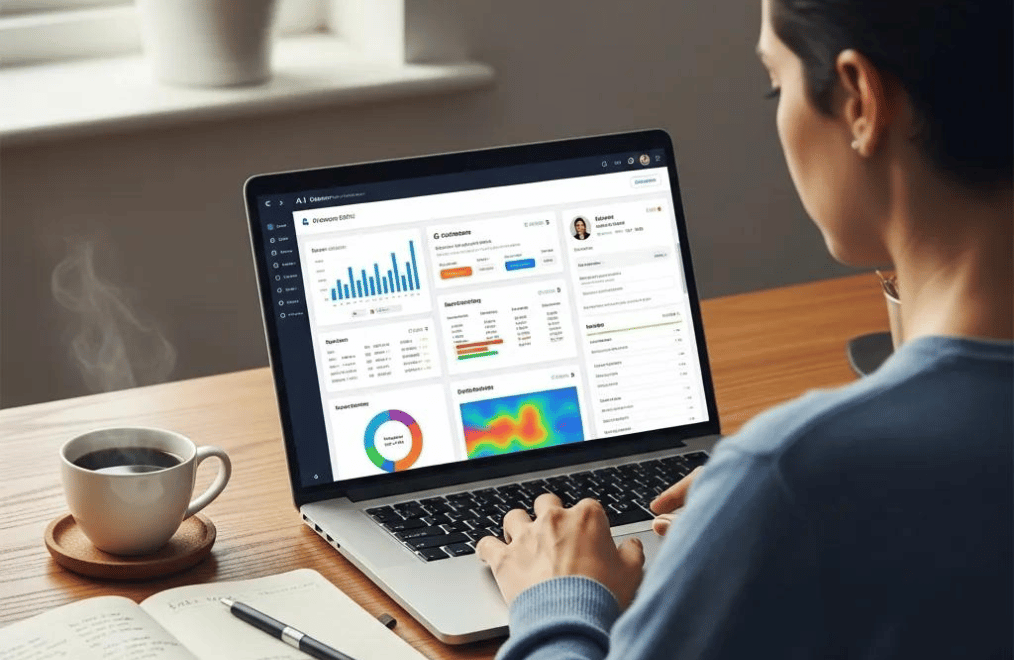
AI-powered CRM tools offer several features that set them apart from traditional CRM systems. These include:reporting.
Predictive Analytics: This feature helps businesses forecast sales trends and customer behaviors, enabling proactive decision-making.
Automated Lead Scoring: AI algorithms can evaluate leads based on their likelihood to convert, allowing sales teams to prioritize their efforts effectively.
Integration Capabilities: Many AI-powered CRMs can integrate with existing tools, ensuring a smooth transition and enhanced functionality.
These features empower small businesses to leverage data-driven insights for improved sales outcomes.
How Does Automated Lead Management Enhance Sales Efficiency?
Automated lead management systems streamline the process of capturing, tracking, and nurturing leads. By automating these tasks, businesses can ensure that no lead falls through the cracks. Key aspects of automated lead management include:automated lead management.
Lead Tracking: Automated systems can monitor lead interactions and behaviors, providing valuable insights into their interests and readiness to buy.
Prioritization: By scoring leads based on their engagement levels, sales teams can focus their efforts on the most promising prospects.
Conversion Rates: With a more organized approach to lead management, businesses can improve their conversion rates significantly.
This efficiency not only saves time but also enhances the overall effectiveness of sales strategies.
What Is Predictive Lead Scoring and Why Is It Important?
Predictive lead scoring is a method that uses data analysis to evaluate the potential of leads to convert into customers. By analyzing historical data and identifying patterns, AI can assign scores to leads based on their likelihood of making a purchase. This process is crucial for small businesses as it allows them to:reporting
Focus Resources: Sales teams can allocate their time and efforts to leads that are more likely to convert, maximizing their efficiency.
Improve Sales Strategies: Understanding which factors contribute to higher conversion rates enables businesses to refine their sales approaches.
Enhance Customer Relationships: By prioritizing leads, businesses can engage with potential customers more effectively, fostering stronger relationships.
Predictive lead scoring is a powerful tool that can significantly impact sales performance.
This approach is further supported by research highlighting the effectiveness of predictive lead scoring models in enhancing sales outcomes.
AI Predictive Lead Scoring for Sales Performance
Although lead scoring is an essential component of lead management, there is a lack of a comprehensive literature review and a classification framework dedicated to it. Lead scoring is an effective and efficient way of measuring the quality of leads. Lead scoring models are commonly categorized into two classes: traditional and predictive. While the former primarily relies on the experience and knowledge of salespeople and marketers, the latter utilizes data mining models and machine learning algorithms to support the scoring process. Predictive lead scoring models are expected to replace traditional lead scoring models as they positively impact sales performance.
The state of lead scoring models and their impact on sales performance, M Wu, 2024
How Do Automated Follow-Ups Increase Customer Engagement?

Automated follow-ups are essential for maintaining customer engagement throughout the sales process. By sending timely and relevant messages, businesses can keep their brand top-of-mind for potential customers. Key benefits of automated follow-ups include:
Consistent Outreach: Regular communication ensures that leads remain engaged and informed about products or services.
Personalization: Automated systems can tailor messages based on customer data, making interactions more relevant and impactful.
Impact on Retention: Engaging customers through automated follow-ups can lead to higher retention rates and increased customer loyalty.
These follow-ups are a vital component of a successful sales strategy, ensuring that potential customers feel valued and informed.
Which Sales Automation Platforms Best Integrate With Existing CRMs?
When selecting a sales automation platform, it's crucial to consider how well it integrates with existing CRM systems. Some of the top platforms known for their integration capabilities include:
HubSpot: Offers seamless integration with various CRM systems, enhancing functionality and user experience.
Salesforce: Known for its robust integration options, allowing businesses to customize their sales processes.
Pulse CRM: Specializes in AI-powered sales automation tools tailored for small businesses, ensuring compatibility with existing systems.
Choosing a platform that integrates well with current tools can significantly enhance sales efficiency and effectiveness.
What Integration Capabilities Does Pulse CRM Offer?
Pulse CRM provides a range of integration capabilities designed to enhance the sales process for small businesses. Key features include:automations.
Data Import and Synchronization: Easily import existing customer data and synchronize it across platforms for a unified view.
Real-Time Updates: Ensure that all team members have access to the latest information, improving collaboration and decision-making.
Enhanced Communication: Integration with communication tools allows for streamlined interactions with leads and customers.
These capabilities make Pulse CRM a valuable asset for small businesses looking to optimize their sales processes.
How Do Integration Features Streamline Sales Pipeline Management?
Integration features play a crucial role in streamlining sales pipeline management. By connecting various tools and systems, businesses can achieve:automation features.
Real-Time Data Synchronization: Ensures that all team members have access to the most current information, reducing errors and improving efficiency.
Automated Follow-Ups: Integration allows for automated follow-up processes, ensuring that leads are nurtured effectively.
Smart Routing: AI-driven routing features can direct leads to the appropriate sales representatives based on their profiles and needs.
These streamlined processes contribute to a more efficient sales pipeline, ultimately leading to improved sales outcomes.
What Are the Measurable Benefits of Using AI Sales Automation Software?
The measurable benefits of using AI sales automation software are significant and can be quantified in various ways. Key benefits include:
Increased Efficiency: Businesses can save time on repetitive tasks, allowing sales teams to focus on high-value activities.
Improved Lead Conversion Rates: With better lead management and follow-up processes, businesses can see a marked increase in conversion rates.
Enhanced Customer Insights: AI tools provide valuable data that can inform sales strategies and improve customer engagement.
These measurable benefits highlight the value of investing in AI sales automatio software for small businesses.
How Does AI Sales Automation Drive Revenue Growth for Small Businesses?
AI sales automation drives revenue growth for small businesses by optimizing various aspects of the sales process. Key factors include:sales process automation.
Lead Capture and Qualification: AI tools can efficiently capture and qualify leads, ensuring that sales teams focus on the most promising prospects.
Call-to-Appointment Conversion: By automating follow-ups and reminders, businesses can increase the number of leads that convert into appointments.
Operational Efficiency: Streamlined processes reduce the time and resources required for sales activities, allowing businesses to scale their operations effectively.
These factors collectively contribute to revenue growth, making AI sales automation a critical investment for small businesses.
What Case Studies Demonstrate Increased Sales Efficiency?
Several case studies illustrate the effectiveness of AI sales automation tools in enhancing sales efficiency. Notable examples include:AI sales automation tools.
Increased Lead Capture Rate: A small business implemented AI-driven lead qualification and saw a significant increase in lead capture within three months.
Improved Call-to-Appointment Conversion: Another company reported a notable increase in appointments scheduled after integrating automated follow-up processes.
Enhanced Agent Efficiency: A case study showed that sales agents using AI tools were able to close deals more quickly than those relying on traditional methods.
These case studies demonstrate the tangible benefits of adopting AI sales automation tools for small businesses.


