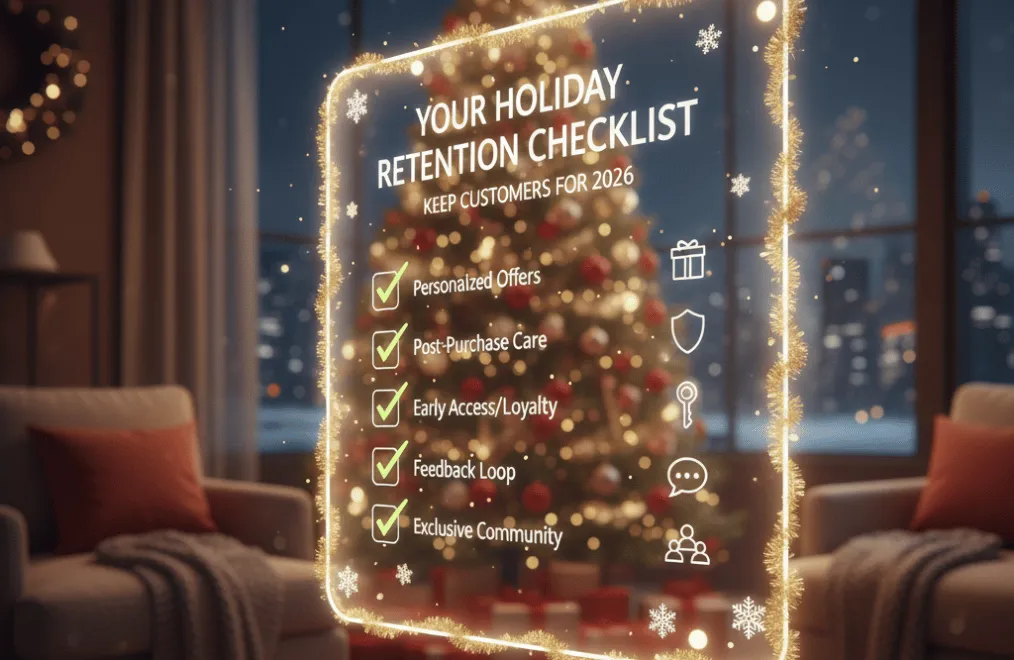
Your Holiday Retention Checklist — Keep Customers for 2026
Your Holiday Retention Checklist to Keep Home ServiceCustomers for 2026

The weeks after the holidays make or break your January schedule: customers who don’t rebook in January leave gaps in technician rosters, depress monthly revenue, and increase acquisition costs for Q1. This checklist walks home service owners and operators through a set of practical, automation-first retention moves—automated thank-you flows, New Year rebooking nudges, review requests, loyalty follow-ups, and AI-driven churn interventions—that convert one-off holiday jobs into predictable repeat bookings. You’ll get timing, channel choices, message templates, and measurable indicators to track lift in rebooking rates and online reputation. The guide focuses on retention automation for home service companies and shows how simple sequences reduce friction, increase customer lifetime value, and prepare teams for a strong January. Read on for step-by-step recipes, comparison tables to pick channels, and workflow examples you can implement before year end.
Why Is HolidayCustomer Retention Critical for Home ServiceBusinesses?
Holiday customers often include one-time calls for emergency fixes, seasonal tune-ups, or year-end cleanings; keeping them into January turns a seasonal spike into sustained revenue. Retention matters because it lowers cost-per-customer: acquiring a new customer typically costs multiple times more than retaining an existing one, while retained clients generate higher lifetime value through repeat service and referrals. Operationally, steady rebooking smooths crew utilization in a slow month, reduces overtime scramble, and stabilizes cash flow into Q1. Understanding these impacts frames why small automations after the holidays can deliver outsized ROI and why retention automation is a priority for home service businesses entering 2026.
Holiday retention delivers three business-critical benefits:
Reduced acquisition cost and higher customer lifetime value through repeat appointments.
Smoother January schedules and better technician utilization that lower operational waste.
Improved online reputation and referral velocity from timely engagement that drives organic leads.
These benefits make clear why investing in targeted post-holiday automations pays off; the next section breaks down the immediate financial cost of losing customers after the holidays so you can quantify the opportunity.
What Is the Cost of Losing Customers After the Holidays?
Losing holiday customers creates both direct and indirect costs: direct lost revenue from missed repeat bookings and indirect costs from higher marketing spend to replace churned clients. A simple ROI example shows the impact: if your average job value is $250 and a retained customer books two more jobs in the year, retaining one customer yields $500 additional revenue versus the cost to reacquire. Multiply that by crew idle hours in January and the momentum loss compounds, making a modest retention lift materially valuable. Businesses should track churn rate, average job value, and January booking delta to estimate potential upside and to make the case for automation investments.
Measuring the cost of churn also clarifies priority actions; for instance, if a 10% increase in January bookings covers automation costs for the quarter, the program is justified. This financial framing leads naturally to the role of AI-powered CRM systems that automate and scale these retention plays without constant manual work.
How Does AI-Powered CRM Enhance Post-Holiday Retention?

AI-powered CRM platforms combine automation, voice capabilities, and reporting to reduce friction in the rebooking funnel: voice AI answers calls 24/7, automations trigger follow-ups, and reporting shows which sequences convert best. These capabilities translate into practical outcomes: higher answer rates on phone leads, faster rebooking responses, and consistent multi-channel follow-ups that convert holiday customers into scheduled appointments. Recent vendor-reported metrics for specialized AI CRMs show dramatically improved responsiveness and conversion—features that matter when customers are deciding whether to rebook or shop competitors.
Mapping these capabilities to outcomes clarifies priorities: Voice AI reduces missed calls and won opportunities; automated sequences increase repeat bookings; consolidated reporting ties activity to revenue. Understanding this linkage lets operators choose automation plays that target the highest-leverage leak points in post-holiday retention.
How Can Automated Thank-You Flows Boost Post-HolidayCustomer Engagement?

Automated thank-you flows are sequenced messages sent after job completion that acknowledge service, confirm satisfaction, and drive next actions like rebooking or leaving a review. They work because timely gratitude reinforces positive experience, offers a low-friction next step, and keeps your brand top-of-mind during the post-holiday lull. For home services, a typical effective sequence includes an immediate thank-you, a short satisfaction check within 48–72 hours, and a rebooking or review prompt within 7–14 days; this cadence nurtures goodwill and invites action without appearing pushy.
Best practices for these flows include short, personalized copy, channel variety (email + SMS + optional voice), and clear CTAs that match the customer’s likely next step. The next subsection provides concrete personalization tokens and template examples you can adapt for HVAC, plumbing, and cleaning jobs.
Automated thank-you flows compared by channel:
What Are Best Practices for Crafting Personalized Thank-You Messages?
Personalized thank-you messages should include at minimum the technician’s name, service performed, and a next recommended action—this combination demonstrates attention and suggests an easy next step. Use tokens like , , and to make short messages feel bespoke; for example, an SMS might say: “Thanks from for today’s . Want to book your next check-up in January?” Tone should be helpful and concise, avoiding heavy sales language while offering value such as a seasonal inspection or a scheduling window. Segment messages by job type and by customer recency to increase relevance and conversion.
Testing and segmentation accelerate improvement: A/B test subject lines, CTA verbs, and timing windows, and then apply winners across the automation. These optimization steps naturally lead to product-level automation that can manage tokens and testing at scale.
How Does PulseCRM.ai Automate Thank-You Flows for Home Services?
PulseCRM.ai provides retention-focused automations that trigger on job completion to send personalized multi-channel thank-you sequences without manual intervention. Setup typically involves defining a job-complete trigger, selecting channels (email + SMS + optional voice AI confirmation), and inserting personalization tokens such as technician name and next-recommended service; sequences run 24/7 and can escalate based on engagement. The platform’s reporting then shows which sequences drive rebooking and review submission so teams can refine wording and timing.
By automating these steps, operators reduce manual follow-up, increase timely engagement, and capture rebooking opportunities that would otherwise be lost—making the investment in automation a practical lever for January bookings.
What Are Effective New Year Rebooking Nudges to Maximize January Bookings?
Rebooking nudges are targeted outreach designed to convert recent customers into January appointments; the most effective nudges are well-timed, concise, and include an easy scheduling path or incentive. Typical high-impact tactics include a 3-touch rebooking sequence (remind, nudge with a small incentive, and offer a suggested window), personalization by service type, and using the fastest-response channel first (often SMS) with email for detail. These tactics increase the odds customers will pick a slot before they forget or book a competitor.
Use a timing matrix tuned to service type and customer behavior to prioritize outreach. The table below summarizes which services benefit most from early rebooking nudges and recommended offers.
This matrix helps choose the right nudge and incentive; the following list provides concrete nudge templates to deploy.
Reminder (Day 3): Short SMS reminding of recent service and suggesting typical next-step timing.
Nudge with Incentive (Day 7): Email offering a small discount or priority scheduling for January.
Final Prompt (Day 14): Voice or SMS follow-up with direct booking link or suggested slots.
These templates reduce friction and encourage early booking, which helps fill January slots predictably.
How Can Automated Scheduling Reminders Increase Repeat Service Bookings?
Automated scheduling reminders reduce friction by offering customers specific, convenient time windows and the ability to confirm with one tap or voice response, which raises conversion rates. A typical automated sequence suggests two to three available slots, follows up if there’s no response, and escalates to a voice AI call for high-value clients or time-sensitive work. This process converts passive customers into confirmed appointments and lowers no-shows through timely confirmations and calendar invites.
Measurement and A/B testing are essential: track conversion from each touchpoint, optimize the number and timing of slots offered, and use reporting to identify which services and customer segments yield the highest rebook rate. These optimization steps feed directly into automation rules and reporting dashboards that show revenue impact.
How Does AI CRM Streamline Rebooking Reminders for Home Service Pros?
AI CRM platforms detect eligible rebooking candidates, predict best-send times, and automate booking by integrating calendar availability and voice/SMS confirmations. Predictive timing models analyze past engagement signals to send messages when an individual customer is most likely to respond, raising open and conversion rates. The result is fewer manual calls, faster booking cycles, and measurable lift in January bookings through automated slot offers and one-tap confirmations.
Consolidated reporting ties rebooking conversions to revenue so teams can prioritize the highest-return sequences and adjust offers or cadence. This orchestration closes the loop between outreach and scheduling outcomes, making rebooking a predictable operational process.
How Do Automated Review Requests Improve Online Reputation After Holidays?
Automated review requests convert positive post-service sentiment into public reviews by routing satisfied customers to review platforms and directing issues to support. Timing is key: ask for feedback when satisfaction is highest—often within 24–72 hours—and follow up for non-responders at 7 days. Well-crafted review flows use a quick survey or NPS to detect promoters and route those customers directly to review pages, while routing detractors to a private supportworkflow to resolve issues before they become public complaints.
Automating this process increases review volume and average ratings over time, which boosts local search visibility and trust for future customers. The next subsection provides templates and decision rules for when to ask for feedback versus a public review.
When and How Should Home Services Request CustomerFeedback?
Request feedback quickly after service completion for the most honest and timely responses; use a short one-question survey within 24–72 hours and follow with a direct review link for promoters. For neutral or negative responses, route customers to a private support flow or offer a remedial appointment—this prevents public negative reviews and shows responsiveness. Platform choice matters: prioritize Google for local SEO, then industry-specific directories; mention the preferred platform in the message to reduce friction.
Templates matter: keep messages concise, use personalization tokens, and include a simple CTA like “Share your experience” or “Help others choose us.” Applying these rules increases conversion to public reviews and strengthens online reputation after the holidays.
How Can AI-Powered Automation Boost Review Collection Efficiency?
AI-enabled automation increases review collection through sentiment routing, automated promoter funnels, and follow-up sequencing. A quick NPS or smile-rating immediately segments customers: promoters receive an automated path to leave a public review, while detractors trigger an internal service recovery flow. This approach raises the share of positive, public reviews while reducing negative public posts by resolving issues privately. Automations also schedule reminders for non-responders and employ best-send-time predictions to boost response rates.
These efficiencies both raise review volume and preserve brandreputation, making automated review flows a high-leverage retention tactic that complements rebooking and loyalty campaigns.
How Do Loyalty Follow-Ups Drive Year-Round Customer Retention?
Loyalty follow-ups convert holiday or seasonal customers into recurring clients by rewarding repeat behavior and creating reasons to choose your business again. Loyalty communications can be simple points programs, tiered benefits, or periodic exclusive offers, delivered via automated sequences tied to behavior like repeat visits or referred customers. Effective programs are easy to join, simple to understand, and integrated into booking flows so customers see immediate value.
Measurement focuses on CLV uplift and repeat-rate increases: track enrollment, redemption rates, and incremental revenue to evaluate program ROI. The following list outlines core elements of automated loyalty communications to design a program that sustains retention beyond the season.
Segmentation: Target messages based on visit frequency and spend.
Reward Mechanics: Clear points or tier thresholds tied to recognizable benefits.
Messaging Cadence: Regular reminders, redemption prompts, and milestone celebrations.
What Are Key Elements of Automated Loyalty Communications?
A robust loyalty sequence includes a welcome message, earn notifications, redemption reminders, and anniversary or milestone rewards, each triggered by customer behavior. Segmentation ensures offers are relevant—occasional customers receive introductory offers while frequent buyers get exclusive perks. Redemption flows must be frictionless: a single tap to apply a discount at booking or an automatic credit applied at invoicing increases participation. Tracking and fraud prevention ensure program sustainability and protect margins.
Designing these mechanics upfront makes loyalty communications predictable and measurable, leading to higher retention and clearer linkage to CLV improvements.
How Can AI CRM Help Build and Manage Loyalty Programs for Home Services?
An AI CRM automates enrollment, tracks points, and sends targeted offers based on behavior, removing manual tracking and ensuring timely reward delivery. Automation triggers—such as “after X visits” or “after Y dollars spent”—initiate personalized offers, while reporting ties loyalty participation to CLV and retention metrics. Integration with scheduling and billing systems ensures points redemptions apply at checkout and that offers align with crew availability.
These automated capabilities reduce administrative overhead and provide the analytics to refine reward structures, making loyalty programs a scalable retention tool.
What Advanced AI-Powered Strategies Reduce Post-HolidayCustomerChurn?
Advanced strategies combine predictive churn scoring, segmentation, and orchestrated multi-channel plays to stop attrition before it happens. Predictive models ingest signals like declining engagement, missed appointments, and service frequency drop-offs to generate risk scores; automations then run tailored win-back sequences for each risk tier. Orchestration across email, SMS, voice, and in-app messaging ensures the right channel reaches the customer at the right time, improving the chance of rebooking and preventing churn.
A short playbook: score customers weekly, apply tiered automated flows (gentle reminder → personalized offer → high-touch outreach), and measure churn delta after interventions. The following table maps predictive signals to actions to guide implementation.
This mapping clarifies what to automate for different risk levels and how to prioritize resources for maximum churn reduction.
How Does Predictive Churn Analysis Identify At-Risk Customers?
Predictive churn models flag customers using signals such as missed appointments, reduced engagement, time-since-last-service, and changes in spend patterns. Models translate these inputs into a risk score that maps to automated actions—low-risk customers get gentle nudges, medium-risk customers receive incentives, and high-risk customers trigger personalized outreach or priority scheduling. Monitoring the effectiveness of these actions by tracking rebooking rates and churn delta validates the model and improves thresholds over time.
Translating scores into actions creates a closed-loop system where data informs outreach and outreach feeds back into model refinement.
The integration of deep learning models into CRM systems offers a sophisticated approach to predicting customerchurn, thereby enhancing retention strategies.
Deep Learning for Enhanced Customer Retention in Customer Relationship Management SystemsCustomer retention is a critical determinant of sustained business success, as retaining existing clientele is generally more cost-effective than acquiring new customers. Current Customer Relationship Management (CRM) systems, while adept at managing customer interactions, encounter challenges in capturing intricate customer behavioral patterns, managing substantial computational overhead, and necessitating extensive feature engineering. To surmount these obstacles, this paper introduces a novel framework that integrates deep learning models into CRM systems to achieve more precise churn prediction, thereby augmenting CRM capabilities for improved customer retention. Optimizing customer retention in CRM systems using AI-powered deep learning models, 2019
What Multi-Channel Communication Tactics Keep Customers Engaged Year-Round?
Multi-channel tactics prioritize the highest-probability channel for each customer: SMS for immediate responses, email for detailed offers, and voice for high-value or time-sensitive jobs. Orchestrate channels with escalation rules and quiet windows to avoid over-contacting: begin with a low-friction channel and escalate if no response, and respect frequency caps to prevent churn from annoyance. Personalize content across channels by using the same tokens and dynamic content so the customer experience feels cohesive.
Testing sequences, measuring attribution, and adjusting send-times based on engagement predictions improves effectiveness. With the right orchestration, multi-channel tactics keep customers engaged without overwhelming them and drive steady rebooking growth.
For teams ready to adopt these checklist items at scale, integrating an AI-powered CRM that centralizes voice AI, multi-channel automations, and reporting can compress setup time and increase conversion. PulseCRM.ai positions these capabilities specifically for home-servicebusinesses by consolidating automation, voice AI, and reporting into one platform that runs 24/7 and surfaces conversion metrics—making it practical to implement the templates and sequences in this checklist. To translate these tactics into measurable outcomes—more rebookings, higher CLV, and fewer churned customers—consider arranging a product training or audit to map templates to your existing workflows and track January performance improvements.
Start with high-impact automations: thank-you flows, rebooking nudges, and review routing.
Measure early and iterate: track rebooking conversion, review lift, and churn delta.
Scale with AI: use predictive timing and segmentation to improve send efficacy.
Adopting these steps converts holiday traffic into predictable revenue and positions your business for a stronger 2026.


